



Food systems account for 72% of global water withdrawals, a trend that exacerbates resource scarcity as food production rises to meet demand. Integrating food and water data through a food-water stack provides stakeholders with actionable insights, driving sustainability and resilience in both systems. The stack incorporates diverse data sources like remote sensing, IoT sensors, and AI tools to inform decisions on water-smart farming, infrastructure, and policy planning.
At the country level, initiatives demonstrate the stack’s transformative potential. In India, AI-driven tools boost crop yields while reducing water usage, showcasing how integrated data can support sustainable agricultural practices. In the Limpopo River Basin, a digital twin integrates real-time water data with predictive AI to improve climate-smart water management. Similarly, Costa Rica’s banana farmers use the stack to plan irrigation strategies and adapt to changing rainfall patterns, ensuring crop resilience and economic stability.
The framework prioritizes open access, interoperability, and co-creation with end users, ensuring flexibility for local adaptation. Recommendations include building efficient data infrastructure, integrating food-water outcomes into national action plans, and fostering multistakeholder collaboration. By aligning with climate goals and nature financing, the stack enables long-term sustainability.
Adopting the food-water stack ensures better resource management, enhanced resilience, and equitable outcomes, addressing the growing challenges of food and water security.
Check the full document here: https://bit.ly/4gwfruG
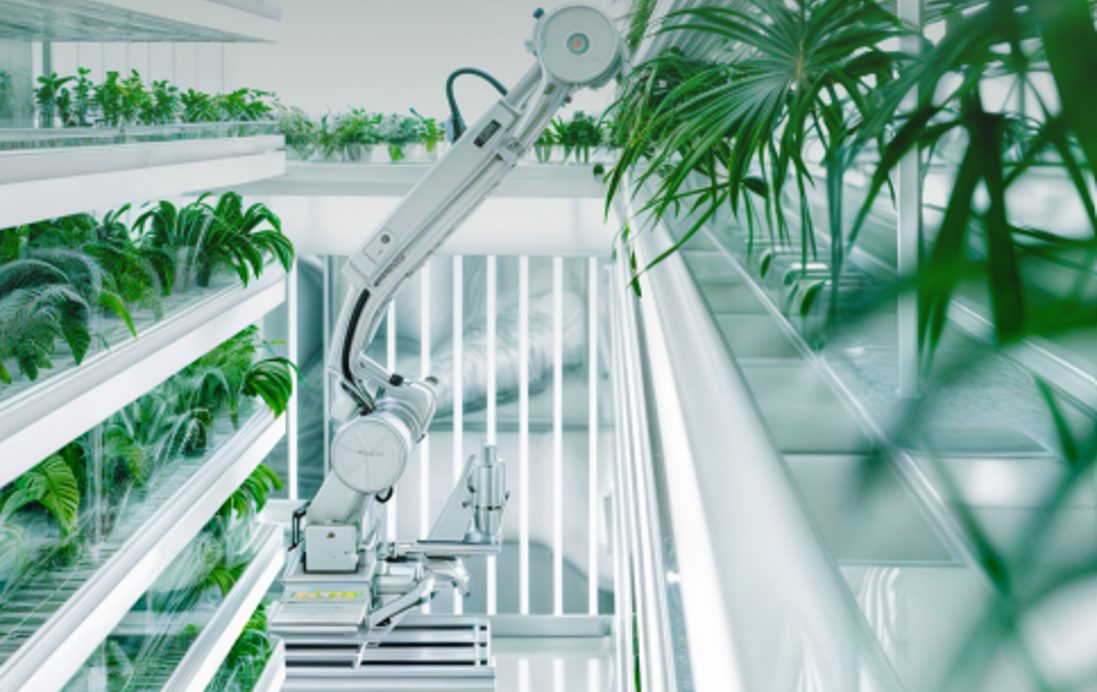
Agritech has the potential to increase food production by 70% using advanced technologies like AI and robotics.
Barcelona Office
Antoni Bell 2, 4th Floor – C
Sant Cugat del Vallès 08174
+34 93 280 7084
Madrid Office
Alfonso XII 62, 2nd Floor
Madrid 28014
+34 91 048 8455
To stay up to date on the latest trends and key information in our sectors, follow us


Accessibility Tools